Unauthorized entry rarely begins with a dramatic break-in. It often starts with a propped-open door, a shared access card, or an unchallenged visitor near a reception desk. This guide examines China’s top ten practical ways to prevent unauthorized access in buildings, from entrance design to daily security habits.
The goal is not to create an intimidating facility. It is to build controlled, observable, and usable spaces. Security engineers and facility managers can begin with a site assessment, identifying blind corners, weak locks, poorly lit loading areas, and doors that remain open too long. Access cards, biometric readers, visitor registration, intercoms, cameras, lighting, and trained reception staff should support one another. Technology alone is insufficient. A camera records an incident but may not prevent it.
Security technologist Bruce Schneier stated, “Security is a process, not a product.” That principle is especially relevant to commercial buildings, residential complexes, schools, and industrial sites. Credentials need regular review. Visitor logs require consistent checks. Staff need short, realistic drills. Maintenance teams must test alarms, door closers, emergency exits, and backup power.
Small details matter.
A delivery entrance can quietly become the weakest point. A forgotten temporary badge can create unnecessary exposure. Some recommendations may also need refinement after reviewing local building layouts, tenant behavior, and operational budgets. No access plan is perfect, and excessive controls can frustrate legitimate users. The strongest approach balances protection, accessibility, privacy, and continuous improvement. This outline presents ten measures that help building operators reduce avoidable access risks and respond more confidently when conditions change.
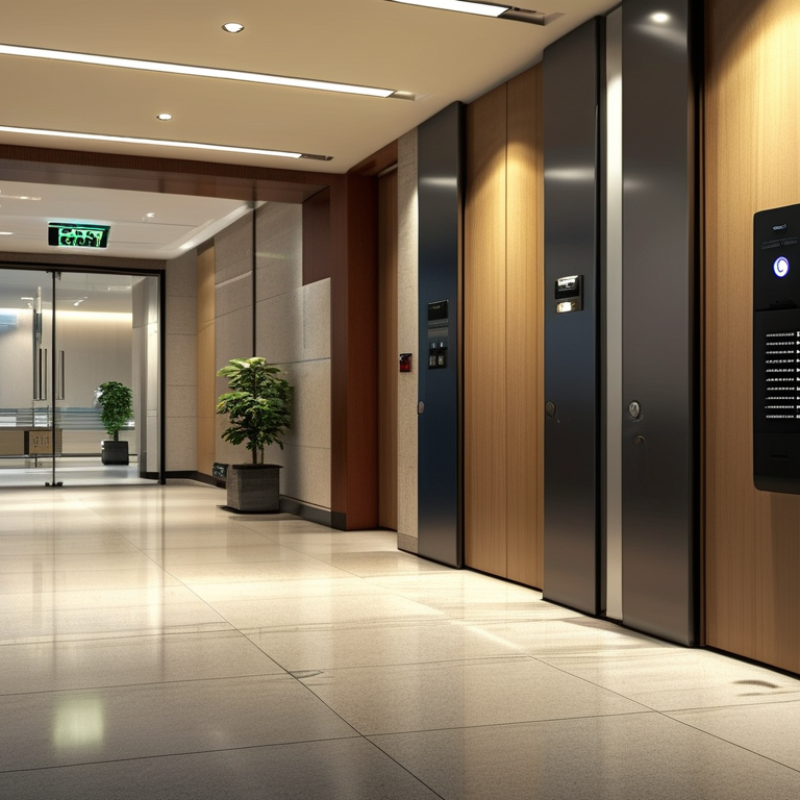
Unauthorized access often begins with ordinary weaknesses, not dramatic forced entry. An unlocked side door, a shared access card, or a loading dock left unattended can create immediate exposure.
The 2024 Data Breach Investigations Report analyzed 30,458 security incidents and found human involvement in 68% of breaches. Although the report focuses on digital security, its lesson applies to buildings: people, habits, and credentials remain critical risk factors.
Walk the site during different shifts. Check main entrances, emergency exits, parking connections, stairwells, reception areas, and contractor routes. Look for doors that fail to close, cameras blocked by signs, and intercoms that cannot identify visitors clearly.
Review access logs for unusual entries, repeated failed attempts, and credentials used outside normal hours. NIST guidance recommends risk-based, layered controls, but a checklist alone can miss real behavior. Staff may hold doors open for convenience. Visitors may follow employees through secure points. These small actions deserve attention.
CISA’s Physical Security Performance Goals emphasize controlled entry, monitoring, and recovery planning. Apply those principles to vulnerable points first. Separate public, staff, and restricted zones with clear boundaries.
Require temporary badges for visitors and contractors. Remove expired credentials quickly. Test alarms and door sensors under realistic conditions, not only during scheduled inspections.
A quiet inspection can look successful while revealing little. People behave differently when the building is busy, tired, or understaffed.
Unauthorized entry often begins with a small assumption: one credential is enough. In practice, it rarely is. A layered identity system checks people through several controlled steps at every entrance. These may include an access card, a personal PIN, and a temporary identity check. The required level should match the area’s risk.
At a busy office entrance, a visitor can present identification at reception, receive a time-limited pass, and meet an approved host. Staff members may use a badge plus a PIN for normal access. Sensitive rooms can require biometric verification, with clear consent and secure data handling. Security staff should review alerts, not blindly trust them. Small details matter, such as preventing one person from holding a door for another.
The building should record access times, failed attempts, and unusual entry patterns. Logs need restricted access and regular review. Clear procedures help staff respond when a badge is lost or a visitor arrives early. Accessibility must remain part of the design, because an extra security step can create barriers for some users.
Our first layered rollout exposed a weakness: employees shared temporary passes during busy periods. Training reduced the problem, but did not remove it. No system is perfect. Periodic testing, honest incident reviews, and updated permissions keep identity checks practical rather than merely impressive.
A secure entrance starts with a correctly specified door, not a decorative lock. Use solid doors, reinforced frames, protected hinges, and commercial-grade deadbolts. Install barriers at loading bays, parking ramps, and restricted corridors. These controls should match the building’s risk profile and daily traffic. The FBI’s 2023 Crime in the Nation report recorded more than 800,000 burglary offenses in the United States. The figure is not a direct measure of unauthorized entry, but it shows why physical protection still matters. A door left ajar can defeat expensive technology.
Tips: Check every entrance during busy periods. Test door closers, strike plates, access readers, and emergency exits. Prevent tailgating with reception controls, turnstiles, or trained security staff. Keep visitor records accurate, but do not create unnecessary personal-data risks. Review access permissions when employees change roles or leave. Small gaps remain common.
Physical barriers should never block safe evacuation. The International Fire Safety Standards Coalition stresses that security measures must support safe egress and emergency response. In China, building owners should also confirm designs against applicable fire-safety and construction requirements. A practical site review often finds unlocked service doors, shared keys, or weak hinges. These are simple failures. They are also easy to overlook. Layered protection works better: locks delay entry, barriers guide movement, and secure doors create accountability. No system is perfect. Periodic testing is still necessary.
A reliable building security plan begins with visibility. Surveillance cameras should cover entrances, loading areas, stairwells, and reception desks. Position them to capture faces without creating unnecessary blind spots. Good lighting matters, especially near doors after sunset. Test recorded images during both daytime and nighttime conditions. Small details can decide whether an access event is understood correctly.
Alarm systems add an immediate response layer. Door contacts can report forced entry, while motion sensors identify unusual movement after closing hours. Configure alerts by location, not just by building. A reception alarm may need a faster response than a storage-room alert. Staff should receive clear notifications with the door name, time, and event type. Keep an event log for routine review. It exposes patterns that a single alert may hide.
No system works perfectly. Cameras can lose clarity during rain, and sensors may trigger false alarms. Review these failures instead of simply silencing them. Trained personnel should verify alerts through live video or on-site checks. Access records, alarm data, and footage should use synchronized time settings. Limit viewing permissions and protect stored recordings from unauthorized changes. Retain footage only as long as operational needs and applicable privacy requirements allow. Regular drills can reveal confusing procedures, though drills themselves may disrupt daily work. That inconvenience is worth examining.
| No. | Preventive Measure | Recommended Control | Access Events to Monitor | Alarm or Response Rule | Suggested Review Metric | Relevant Good Practice |
|---|---|---|---|---|---|---|
| 1 | Use unique identity credentials | Assign every employee, contractor, and visitor an individual credential. Prohibit shared cards, PINs, and accounts. | Successful entries, denied entries, duplicate credential use, and credentials used outside assigned areas. | Suspend the credential after confirmed loss, termination, or suspected compromise; notify security staff of repeated denials. | 100% of active credentials linked to a named person | Least privilege and individual accountability principles |
| 2 | Apply role-based access permissions | Give access according to job role, location, time period, and business need. Separate public, office, technical, and high-security zones. | Access to restricted floors, server rooms, storage areas, control rooms, and areas outside scheduled hours. | Create a review task for every access attempt that conflicts with the user’s role or approved schedule. | Permission review at least quarterly | Role-based access control and periodic authorization review |
| 3 | Combine access control with video surveillance | Link each access event with time-synchronized camera footage covering the reader, doorway, and immediate approach. | Valid entries, denied entries, tailgating, forced doors, and mismatches between the credential holder and the person on camera. | Send a visual verification task when a denied event, forced-door event, or identity mismatch occurs. | Camera and access-event timestamps synchronized | Integrated physical security monitoring and event correlation |
| 4 | Install door position and forced-entry alarms | Fit controlled doors with monitored door-position sensors and define normal open durations for each location. | Door forced open, door held open, controller offline, reader tampering, and repeated unlock commands. | Generate a high-priority alarm for forced opening and escalate a held-open condition after its approved time limit. | 100% of critical doors supervised | Monitored doors, alarm acknowledgement, and documented response procedures |
| 5 | Protect against tailgating and piggybacking | Use controlled turnstiles, interlocking doors, visitor escorts, anti-passback rules, and camera coverage at entry points. | Multiple persons following one credential, repeated entry without a corresponding exit, and unusual occupancy changes. | Alert security personnel for suspected multiple-person passage or an impossible entry-and-exit sequence. | Tailgating incidents recorded and investigated | Mantrap, anti-passback, visitor management, and security awareness controls |
| 6 | Strengthen visitor and contractor management | Pre-register visitors where practical, verify identity, issue time-limited badges, define host responsibility, and collect badges on departure. | Visitor check-in, badge issuance, host approval, access-area changes, badge expiry, and badge return. | Automatically disable expired visitor credentials and notify the host or security desk of overdue departures. | All visitor badges have an expiry time | Visitor identification, escort, logging, and temporary authorization |
| 7 | Use multi-factor authentication for sensitive zones | Require two independent factors, such as a credential plus a biometric or a credential plus a security PIN, for high-risk areas. | Single-factor attempts, biometric failures, repeated PIN failures, and access to high-value assets. | Temporarily lock the credential after repeated failures and require an authorized security review. | Two factors required for designated high-risk doors | Multi-factor authentication and stronger controls for sensitive assets |
| 8 | Manage keys, cards, and credentials throughout their lifecycle | Maintain an inventory of physical keys, access cards, mobile credentials, and emergency overrides from issuance through return or destruction. | Unreturned badges, duplicate credentials, inactive users with active access, and emergency override use. | Open an investigation for unreturned credentials and review every emergency override event. | Access removed promptly after role change or departure | Joiner, mover, leaver, asset inventory, and revocation processes |
| 9 | Maintain complete and protected audit logs | Record the user, credential, door, timestamp, result, operator action, alarm status, and related video reference. Restrict log modification rights. | All granted and denied events, system changes, alarm acknowledgements, and administrator activity. | Alert when logging stops, clocks drift, storage capacity is low, or audit records are altered unexpectedly. | Daily health check and documented retention period | Auditability, time synchronization, restricted log access, and evidence preservation |
| 10 | Test alarms, cameras, and emergency procedures | Conduct scheduled tests of readers, locks, door sensors, cameras, backup power, communication paths, and security response procedures. | Device offline status, failed alarm transmission, obstructed camera views, access during power failure, and operator response time. | Escalate unacknowledged alarms and record corrective actions until the fault is closed. | Monthly functional checks; documented corrective actions | Preventive maintenance, business continuity, alarm response, and regular exercises |
A secure building depends on procedures that staff can follow under pressure. In Chinese offices, security teams should review access rules at least monthly. Check visitor records, badge permissions, camera coverage, and doors that remain open too long. Small gaps often appear during shift changes. They deserve attention.
When an unknown person follows an employee through a controlled entrance, staff should avoid confrontation. They can greet the person, request identification, and contact the designated supervisor. If the explanation remains unclear, guide the person to a public reception area. Keep a safe distance. Never judge anyone by clothing, age, or appearance. Record the time, location, people involved, and actions taken. Preserve relevant footage according to retention rules and privacy requirements. Notify building management or emergency services when an immediate safety risk exists.
After each attempt, review what happened with the team. Was the door sensor working? Did staff know whom to call? Did the visitor process create confusion? Honest answers improve reliability. A short drill can test response times without disrupting tenants. However, procedures should not become rigid scripts. Real situations vary. One weakness remains common: employees may hesitate because they fear appearing impolite. Supervisors should reinforce calm, respectful intervention and provide clear escalation paths. Update training, access permissions, and signage when evidence shows a change is needed.
: Check side doors, loading docks, stairwells, parking links, emergency exits, and reception areas. Look for doors that fail to close or cameras blocked by signs. Busy periods reveal more. Review each shift.
Staff may hold doors open for convenience. Visitors may follow employees through secure entrances. Shared passes can also weaken accountability. Small shortcuts matter.
Review visitor records, permissions, cameras, and door alerts at least monthly. Pay special attention to shift changes and understaffed periods. A quiet inspection may miss real behavior.
Visitors should show identification at reception and receive a time-limited pass. An approved host should confirm the visit. Restricted areas may require another verification step. Keep the process clear.
Staff should avoid holding secure doors for unknown people. They can greet the person politely and request identification. If unclear, contact a supervisor and guide the person to reception. Keep distance.
Systems should record entry times, failed attempts, unusual patterns, and expired permissions. Only authorized personnel should review these logs. Regular checks may reveal repeated problems. Privacy still matters.
Record the time, location, people involved, and actions taken. Preserve relevant footage under approved retention rules. Check the door sensor and response process. Do not hide mistakes.
Use short drills to test response times without disrupting occupants. Discuss what confused staff or slowed escalation. Update training, signage, and permissions when evidence changes. Training helps, but it cannot remove every weakness.
Preventing unauthorized access in buildings begins with identifying potential risks and vulnerable entry points, including main doors, emergency exits, loading areas, underground garages, and restricted internal spaces. A practical security plan should assess who needs access, when access is permitted, and how entry points could be misused. From there, organizations can apply layered identity verification, such as access cards, personal identification, visitor registration, and additional checks for sensitive areas.
Physical protection is also essential. Secure doors, reliable locks, controlled barriers, and properly managed keys can reduce unwanted entry. Surveillance cameras, lighting, alarms, and access logs help monitor activity and create a clear record of unusual events. Finally, security procedures should be reviewed regularly, staff should understand how to report concerns, and every attempted unauthorized entry should receive a prompt, documented response. By combining technology, physical controls, trained personnel, and continuous evaluation, building owners can develop an effective approach to how to prevent unauthorized access in buildings while maintaining a safe and orderly environment.

KBM Living